English
 Arabic
 French
 Spanish
 Portuguese
 Deutsch
 Turkish
 Dutch
Dutch
 Italiano
 Russian
 Romaian
 Portuguese (Brazil)
 Greek
Greek
Netflix October Departures – Titles Leaving Soon
Games |
2026-01-15 05:55:18
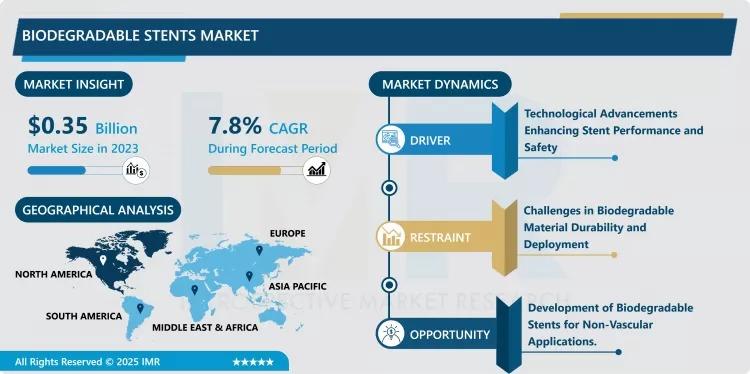
The global biodegradable stents market represents a transformative shift in interventional cardiology and vascular therapy. Unlike traditional metallic stents that remain in the body permanently, biodegradable or bioabsorbable stents are designed to provide temporary mechanical support to blood vessels during the critical healing phase. Once the vessel has regained its structural integrity and can remain open on its own, these devices are naturally absorbed or dissolved by the body. This "leave-nothing-behind" philosophy offers a significant advantage over traditional alternatives by eliminating long-term risks such as chronic inflammation, stent thrombosis, and the need for lifelong dual antiplatelet therapy.
Primarily utilized in the treatment of coronary and peripheral artery diseases, these advanced medical devices are constructed from biocompatible polymers or biodegradable metals. The ability of these stents to restore the natural vasomotion of the blood vessel is a major clinical breakthrough, as it allows the artery to respond naturally to physiological demands—a function often hindered by permanent metal cages. As the healthcare industry moves toward minimally invasive and patient-centric solutions, biodegradable stents are increasingly becoming the preferred choice for younger patients and those with complex vascular conditions who require high-precision care without permanent foreign implants.
The Biodegradable Stents Market is segmented into Product Type, Material, Application, and End User. By Product Type, the market is categorized into Coronary Stents, Peripheral Stents, and Others. By Material, the market is categorized into Polymeric Stents and Metallic Stents. By Application, the market is categorized into Coronary Artery Disease and Peripheral Artery Disease. By End User, the market is categorized into Hospitals, Cardiac Centers, Ambulatory Surgical Centers, and Specialty Clinics.
Rising Global Prevalence of Cardiovascular Diseases (CVDs): The primary engine driving the biodegradable stents market is the escalating incidence of cardiovascular conditions such as coronary artery disease and hypertension. Modern sedentary lifestyles, unhealthy dietary habits, and rising obesity levels have led to a surge in artery-related blockages worldwide. As the global geriatric population grows, the demand for percutaneous coronary intervention (PCI) procedures has skyrocketed. Biodegradable stents are increasingly favored by healthcare providers as they mitigate the risk of late-stent complications, which are more common in permanent implants, thereby improving long-term patient survival rates and reducing the burden on healthcare systems.
Advancements in AI-Guided Placement and Material Science: A significant opportunity exists in the integration of Artificial Intelligence (AI) and high-resolution imaging for the precision deployment of bioabsorbable scaffolds. Real-time imaging techniques like Optical Coherence Tomography (OCT) allow surgeons to place stents with micron-level accuracy, ensuring optimal vessel support while the device dissolves. Furthermore, the development of next-generation magnesium-based alloys offers a lucrative path for innovation. These metallic bioabsorbable materials provide higher radial strength compared to traditional polymers, allowing for thinner stent struts that reduce vessel injury and promote faster healing, opening new doors for treating complex lesions in smaller vessels.
Product Type The Product Type segment is further classified into Coronary Stents, Peripheral Stents, and Others. Among these, the Coronary Stents sub-segment accounted for the highest market share in 2023. This dominance is attributed to the massive global volume of coronary angioplasty procedures performed to treat heart attacks and chronic stable angina. As coronary artery disease remains the leading cause of death globally, the focus on developing "scaffolds" that disappear after providing short-term support has concentrated heavily on this segment. Innovations in drug-eluting coatings on coronary scaffolds have further cemented this segment's lead by drastically reducing restenosis rates.
Material The Material segment is further classified into Polymeric Stents and Metallic Stents. Among these, the Polymeric Stents sub-segment accounted for the highest market share in 2023. Polymeric materials, particularly Poly-L-lactic acid (PLLA), have been the most widely adopted due to their excellent biocompatibility and well-defined degradation profiles. These polymers allow for a predictable breakdown into carbon dioxide and water over a period of 24 to 36 months. Their versatility in carrying and eluting antiproliferative drugs makes them highly effective in preventing vessel re-narrowing, making them the gold standard for clinicians seeking to minimize late-stage inflammatory responses.
· Abbott Laboratories (USA)
· Boston Scientific Corporation (USA)
· Biotronik SE & Co. KG (Germany)
· Terumo Corporation (Japan)
· Medtronic plc (Ireland)
· B. Braun SE (Germany)
· REVA Medical, LLC (USA)
· Elixir Medical Corporation (USA)
· Kyoto Medical Planning Co., Ltd. (Japan)
· Meril Life Sciences Pvt. Ltd. (India)
· Lepu Medical Technology Co., Ltd. (China)
· Arterius Limited (UK)
· Amaranth Medical, Inc. (USA)
· MicroPort Scientific Corporation (China)
· Svelte Medical Systems (USA)
and other active players.
News 1: In April 2024, Abbott received FDA approval for its Esprit BTK Everolimus-Eluting Resorbable Scaffold System. This marks the first resorbable scaffold specifically approved for patients with chronic limb-threatening ischemia (CLTI) in the vessels below the knee.
This development is a major breakthrough for peripheral artery disease treatment. Unlike permanent metal stents, which can fail or fracture in the high-stress environment of the leg, the Esprit BTK dissolves after the vessel is healed. This allows the artery to return to its natural state and keeps future treatment options open for patients with severe blockages.
News 2: In May 2024, Abbott launched the XIENCE Sierra everolimus-eluting coronary stent system in India following regulatory approval. While a metallic platform, this launch underscores the company's aggressive expansion in high-growth markets where bioabsorbable research is also accelerating.
This expansion into the Asia-Pacific region highlights the growing demand for advanced cardiac intervention tools. By establishing a strong manufacturing and distribution presence in India, Abbott is positioning itself to capture the massive patient pool requiring sophisticated stent technology, further fueling the transition toward advanced materials like bioresorbable scaffolds in the near future.
· Coronary Stents dominate the market due to the high volume of PCI procedures worldwide.
· North America holds the largest revenue share, while Asia-Pacific is the fastest-growing region.
· Polymeric Materials (PLLA) remain the most used substance for biodegradable scaffolds.
· "Leave-nothing-behind" treatment strategies are significantly reducing long-term post-operative complications.
CTA: Access Full Insights - Download Sample Report Here
📞 Contact Us
Introspective Market Research Pvt. Ltd.
Phone: +91-91753-37569
Email: sales@introspectivemarketresearch.com
Web: www.introspectivemarketresearch.com