English
 Arabic
 French
 Spanish
 Portuguese
 Deutsch
 Turkish
 Dutch
Dutch
 Italiano
 Russian
 Romaian
 Portuguese (Brazil)
 Greek
Greek
Microsoft Zero-Day Flaw: Security Concerns Revealed
Games |
2025-12-09 01:25:18
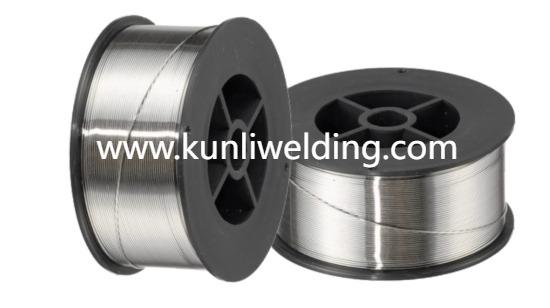
Real world fabrication environments rarely accommodate the luxury of positioning all joints in comfortable flat welding orientations where gravity assists rather than opposes the welder's efforts to control molten metal behavior. Ships, storage tanks, structural frameworks, and architectural assemblies all contain joints located in awkward positions requiring welders to work overhead, vertically, or in confined spaces where maintaining quality demands both skill and materials that cooperate under challenging conditions. Aluminum Welding Wire ER5183 encounters these varied positional demands throughout diverse fabrication applications, and understanding how this composition responds to gravitational effects and restricted access situations helps fabricators anticipate whether it suits projects involving extensive positional welding or should be reserved for primarily flat position work. Aluminum Alloy Welding Wire Suppliers provide technical guidance on positional capabilities because successful fabrication depends on matching material characteristics to the geometric realities construction imposes regardless of whether those realities create convenient or difficult welding conditions.
Flat position welding establishes the performance baseline against which all other orientations are measured, offering welders the most favorable conditions where gravity naturally flattens puddles and torch manipulation proceeds without fighting against molten metal attempting to flow away from intended locations. The solidification characteristics and puddle fluidity of this composition create weld pools that spread adequately for complete fusion while maintaining sufficient body that they don't become unmanageably thin and difficult to control. Bead profiles in flat position typically exhibit uniform width, consistent reinforcement height, and smooth ripple patterns reflecting stable process conditions. Heat input optimization proceeds more easily in flat position because excessive parameters create readily visible defects without the complications that gravitational effects introduce in other orientations.
Horizontal fillet welds on vertical surfaces present the first departure from ideal conditions, creating asymmetric puddle behavior where gravity constantly pulls molten metal toward lower joint members while welders attempt achieving equal leg lengths on both sides. The surface tension and viscosity characteristics of weld metal from this composition provide adequate resistance to gravitational sagging when welders employ proper technique including torch angle manipulation directing arc force upward and travel speeds preventing excessive molten metal accumulation. Achieving consistent leg length ratios requires conscious compensation for gravity's influence, with slight upward torch angles helping support puddles against downward flow. Multi pass horizontal welding demands attention to previous bead profiles ensuring each layer provides appropriate foundation for subsequent passes without creating geometric conditions promoting undercutting or excessive convexity.
Vertical position welding divides into uphill and downhill progression, each presenting distinct challenges and suitable for different application contexts. Uphill vertical welding advances from bottom to top, constantly fighting gravity as molten metal attempts flowing back down the joint. Success requires maintaining small, quickly solidifying puddles through close arc length control, modest heat input, and either stringer beads or minimal weave techniques limiting puddle size. The rapid solidification this composition exhibits helps by freezing deposited metal quickly before it can run excessively downward, though welder skill remains paramount for quality results. Downhill vertical progression works with gravity, generally limited to thinner materials where faster travel speeds compensate for reduced penetration this technique produces. The composition handles downhill vertical reasonably well within appropriate thickness limits, though some codes restrict or prohibit downhill welding for structural applications.
Overhead welding represents the most demanding position where gravity pulls molten metal directly away from joints toward welders positioned below. Only materials that solidify rapidly while maintaining adequate fluidity for proper fusion can succeed overhead, and welder technique becomes absolutely critical. This composition solidifies quickly enough for skilled welders to complete acceptable overhead welds when they maintain very short arc lengths, use minimal or no weave patterns, and travel at speeds keeping puddles small enough that surface tension can support them against gravity. Attempting large weld beads or slow progression in overhead work inevitably leads to sagging, dripping, and incomplete fusion regardless of filler material selection. Smaller wire diameters prove advantageous overhead because they deliver less molten metal per unit time, creating more manageable puddles compared to larger diameter alternatives.
Pipe welding combines multiple positions within single joint rotations as welders progress around circumferences, transitioning from flat through vertical to overhead and back. Fixed position pipe welding where joints cannot be rotated demands mastery of all positions because avoiding any orientation proves impossible. The composition must perform adequately throughout this complete position range, and welders must adjust technique continuously as they progress around pipes maintaining quality despite constantly changing gravitational effects.
Arc characteristics and metal transfer modes interact with welding position because spray transfer, globular transfer, and short circuit transfer each behave differently under gravitational influence. Spray transfer generally suits flat and horizontal positions while proving problematic overhead where large droplets would separate from the arc and fall. Pulsed spray or controlled short circuit modes better suit positional work by reducing the volume of molten metal present simultaneously in the puddle.
Shielding gas density influences coverage stability in various positions because argon's greater density compared to air affects how protective atmospheres flow in orientations where gas must move against or across gravitational gradients. Overhead and vertical welding benefit from argon's tendency to settle and provide coverage even when flowing against natural convection patterns.
Training requirements escalate dramatically for positional welding compared to flat position work, making material selection important for supporting welder success across varied skill levels. Compositions offering forgiving puddle behavior reduce the expertise threshold for acceptable positional results, enabling broader workforce participation in complex fabrication.
Joint preparation and fit up quality become increasingly critical in positional welding because gaps and misalignment create greater challenges when gravity opposes achieving proper weld formation and fusion throughout joint volumes.
Quality acceptance standards should recognize positional challenges when evaluating weld appearance and consistency, understanding that achieving uniform profiles across all positions represents greater difficulty than flat position baselines would suggest.
Positional capability ultimately determines whether filler materials suit comprehensive fabrication applications requiring full position qualification versus simpler projects where favorable orientations predominate throughout assembly sequences. Position specific application guidance and aluminum welding wire products are available at https://www.kunliwelding.com/ supporting fabrication operations facing diverse welding orientation requirements.