English
 Arabic
 French
 Spanish
 Portuguese
 Deutsch
 Turkish
 Dutch
Dutch
 Italiano
 Russian
 Romaian
 Portuguese (Brazil)
 Greek
Greek
Heat Treating Market Outlook 2034: Size to Hit USD 155.52 Billion at 3.6% CAGR
Other |
2025-12-19 10:43:46
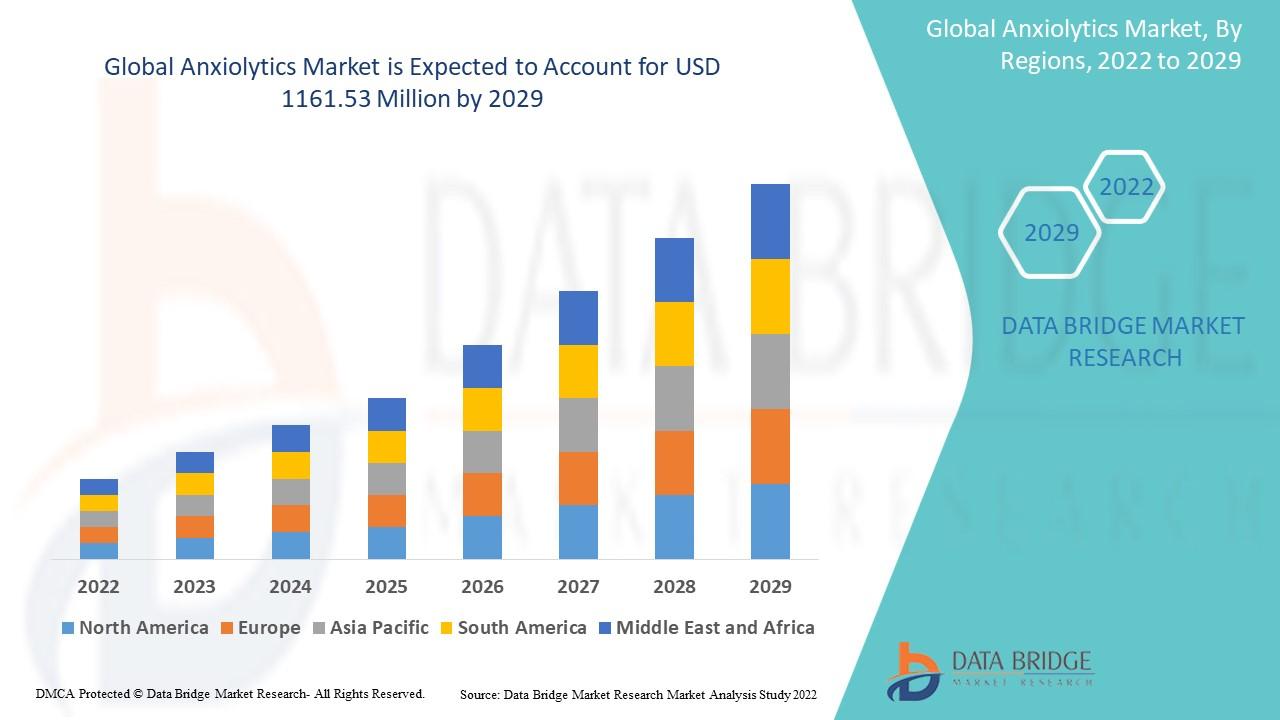
The Anxiolytics Market, a core segment within the global central nervous system (CNS) therapeutics space, is experiencing an accelerated growth phase, largely driven by the monumental global shift toward prioritizing mental health.
Global anxiolytics market size was valued at USD 932.07 million in 2024 and is projected to reach USD 1325.50 million by 2032, with a CAGR of 4.5% during the forecast period of 2025 to 2032.
Anxiolytics, or anti-anxiety medications, are critical pharmacotherapies used to manage a spectrum of conditions including Generalized Anxiety Disorder (GAD), Panic Disorder, Social Anxiety Disorder, and Obsessive-Compulsive Disorder (OCD). The market is characterized by a confluence of rising disease prevalence, pharmaceutical innovation, and a significant reduction in the stigma historically associated with seeking mental health treatment.
The global Anxiolytics Market size was estimated to be approximately USD 14.5–15.0 billion in 2024. Projections indicate a strong upward trajectory, with the market expected to reach a valuation of over USD 21 billion by 2030. This growth corresponds to a steady Compound Annual Growth Rate (CAGR) anticipated to hover between 4.2% and 4.8% throughout the forecast period of 2024 to 2030.
The primary force behind this expansion is the alarming and increasing global prevalence of anxiety disorders, which affect hundreds of millions of people worldwide. Compounding this, the widespread adoption of digital health platforms and the integration of mental health services into primary care settings have dramatically improved diagnostic rates and patient access to pharmacological treatment, thus fueling market demand.
Several micro- and macro-trends are shaping the competitive landscape of the anxiolytics market:
Rising Mental Health Awareness and Destigmatization: Public health campaigns, coupled with advocacy from non-profit and government organizations, have effectively reduced the societal stigma around mental illness. This has encouraged more individuals to seek professional help and, consequently, increased prescription rates for anxiolytic drugs.
Telehealth and Digital Therapeutics Integration: The post-pandemic surge in telemedicine and virtual health solutions has made mental healthcare more accessible, particularly in remote or underserved areas. The use of digital therapeutics (DTx) as adjunct treatments alongside traditional pharmacotherapy represents a high-growth area, enhancing patient monitoring and compliance.
Pharmaceutical Innovation and Pipeline Diversity: The market is moving beyond traditional drug classes. Research and development efforts are increasingly focused on novel agents, including non-GABAergic compounds and those leveraging psychedelic mechanisms, which promise rapid onset of action, improved efficacy, and a better side-effect profile, specifically lower risk of dependency compared to legacy treatments.
Focus on Personalized Medicine: Advancements in genomics and biomarker research are paving the way for personalized anxiolytic prescribing. Tailoring drug choice and dosage to individual patient neurobiological profiles aims to maximize treatment effectiveness and minimize adverse reactions, driving therapeutic adherence.
The Anxiolytics Market segmentation reveals distinct areas of current dominance and future potential:
| Segmentation Criteria | Leading Segment (Largest Share) | Fastest Growing Segment (High CAGR) |
| By Drug Class | Selective Serotonin Reuptake Inhibitors (SSRIs) | Atypical Antipsychotics & Novel Agents |
| By Distribution Channel | Retail Pharmacies | Online Pharmacies/Digital Channels |
| By Route of Administration | Oral Administration | Intranasal and Parenteral Delivery |
Drug Class Dominance: While SSRIs (Selective Serotonin Reuptake Inhibitors)—including commonly prescribed agents like sertraline and fluoxetine—hold the largest market share due to their broad use in both depression and anxiety and favorable side-effect profile, the fastest-growing segment is emerging within Atypical Antipsychotics and novel non-addictive agents like Azapirones (e.g., Buspirone). Benzodiazepines, though effective for acute relief, are seeing a relative decline in long-term share due to concerns over dependency and potential for misuse.
Geographic Share: North America commands the largest revenue share in the global Anxiolytics Market. This dominance is attributed to a high prevalence of mental health disorders, a well-established healthcare reimbursement system, and the strong presence of major pharmaceutical research companies. Conversely, the Asia Pacific (APAC) region is anticipated to register the highest Compound Annual Growth Rate (CAGR) through 2030. This acceleration is fueled by rising economic prosperity, improvements in healthcare infrastructure, increased governmental investment in mental health programs, and a massive, underserved patient population in countries like China and India.
The competitive environment in the Anxiolytics Market is dynamic, characterized by intense R&D activities, strategic licensing agreements, and acquisitions aimed at bolstering product portfolios. Major pharmaceutical companies are focused on developing innovative treatments, expanding indications for existing drugs, and securing intellectual property rights for next-generation anxiolytic mechanisms.
Key market players holding significant influence and share include:
Pfizer Inc.
Eli Lilly and Company
Johnson & Johnson
GlaxoSmithKline plc (GSK)
AstraZeneca plc
H. Lundbeck A/S
Roche Holding AG
Bristol-Myers Squibb Company
Sanofi S.A.
These industry leaders are driving market growth by leveraging their robust distribution networks and deep investment in clinical trials, particularly for compounds with novel mechanisms of action that address the significant unmet need for rapid-acting, non-sedating, and non-addictive anxiolytic solutions.
Browse More Reports:
Global Bariatric Patient Room Market
Global Candelilla Wax Market
Global Confocal Laser Scanning Market
Global Contour and Highlight Market
Global Dairy Enzymes Market
Global Fluvoxamine Market
Global Fracking Fluid and Chemical Market
Global Full Egg Replacer Market
Global Glass Reinforced Plastics (GRP) Pipes Market
Global Hydrogenated C6-14 Olefin Polymers Market
Global Hydrogen Bromide Market
Global Neotame Market
Global Neurogenic Bladder Infections Market
Global Next Generation Packaging Market
Global Planting Equipment Market
The Anxiolytics Market is on a robust expansion path, fundamentally supported by the inescapable societal recognition of mental health as a critical public concern. The fusion of pharmaceutical innovation, a growing global awareness, and technological integration (telehealth) positions this market not just for steady financial growth, but also for a profound evolution in treatment delivery. Through 2030, sustained investment in novel drug pipelines and targeted therapies, particularly in high-growth APAC markets, will be crucial for companies seeking to capture maximum market share and address the global mental health crisis.
Contact Us:
Data Bridge Market Research
US: +1 614 591 3140
UK: +44 845 154 9652
APAC : +653 1251 975
Email:- corporatesales@databridgemarketresearch.com