English
 Arabic
 French
 Spanish
 Portuguese
 Deutsch
 Turkish
 Dutch
Dutch
 Italiano
 Russian
 Romaian
 Portuguese (Brazil)
 Greek
Greek
Enterprise Indoor Location-Based Services Market Growth & Competitive Analysis
Other |
2025-11-14 17:12:51
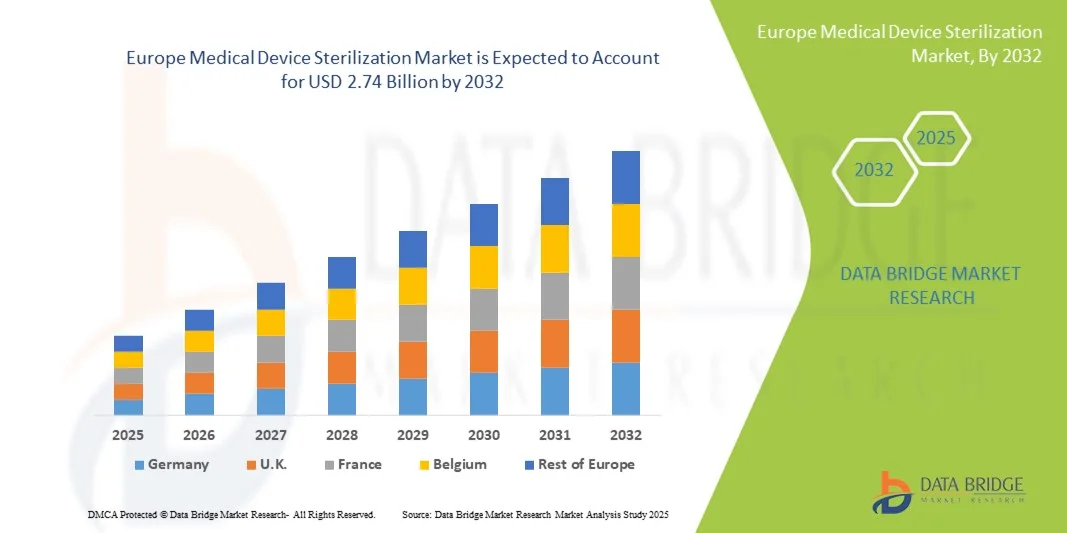
The Europe Medical Device Sterilization Market is experiencing steady growth due to expanding medical device production, rising surgical procedures, stricter regulatory requirements, and the increasing emphasis on infection prevention and control across healthcare facilities. Europe remains one of the world’s leading regions in medical device innovation and manufacturing, driving consistent demand for reliable, validated sterilization processes.
Sterilization is a critical process to ensure the safety, efficacy, and regulatory compliance of medical devices. In Europe, sterilization solutions are used extensively by:
Medical device manufacturers
Hospitals and clinics
Pharmaceutical companies
Laboratories and research centers
Regulatory bodies such as the European Medicines Agency (EMA) and European Commission (EC) enforce strict sterilization and contamination control standards, supporting market maturity and growth.
Europe, particularly Germany, Switzerland, the UK, and France, is a hub for medical device production. The rising need for sterile, safe, and high-quality devices—especially single-use products—is significantly boosting sterilization demand.
The region’s ageing population and high prevalence of chronic diseases have led to a surge in:
Orthopedic surgeries
Cardiovascular procedures
Diagnostic imaging interventions
Outpatient and minimally invasive surgeries
These procedures require sterilized instruments and devices, driving market growth.
European regulations require:
Validated sterilization cycles
Documentation and traceability
Compliance with ISO 11135, ISO 17665, and ISO 11137 standards
This creates a strong demand for advanced sterilization technologies that ensure consistency and safety.
Hospitals in Europe increasingly prioritize sterilization to minimize the risk of infections, prompting investment in both in-house and outsourced sterilization services.
Ethylene Oxide (ETO) Sterilization
Steam Sterilization (Autoclave)
Radiation Sterilization
Gamma radiation
Electron beam (E-beam)
X-ray
Hydrogen Peroxide Plasma
Dry Heat Sterilization
Medical device manufacturers
Hospitals and clinics
Pharmaceuticals & biotechnology companies
Research and academic laboratories
In-house sterilization
Outsourced sterilization services
Germany
UK
France
Italy
Spain
Netherlands
Switzerland
Rest of Europe
With the increasing use of heat- and moisture-sensitive medical devices, demand for hydrogen peroxide plasma and ETO sterilization continues to rise.
Healthcare facilities and manufacturers are outsourcing sterilization to specialized third-party service providers to:
Reduce operational costs
Enhance documentation and validation
Ensure compliance with regulatory standards
Gamma and e-beam sterilization are gaining traction for large-scale medical device production due to:
Rapid processing time
Deep penetration
High reliability
Europe is witnessing greater adoption of:
RFID-enabled tracking
Automated sterilization workflows
Real-time process monitoring
Comprehensive cycle documentation
These improvements enhance traceability and quality assurance.
European companies are investing in:
Reduced-EtO sterilization methods
Energy-efficient sterilization equipment
Improved waste and emissions management
Advanced sterilization equipment and validation systems require significant investment.
Navigating multiple EU-wide and country-specific regulations can be challenging for market participants.
The Europe medical device sterilization market includes:
Large multinational sterilization service providers
OEMs with in-house sterilization units
Specialized sterilization technology manufacturers
Key strategies include:
Capacity expansion
Adoption of advanced sterilization methods
Strategic collaborations with medical device companies
Strengthening quality management systems
Browse More Reports:
Global Connected Home Medical Sensor Device Market
Global Disseminated Intravascular Coagulation (DIC) Market
Global Dopamine Agonist Drug Market
Global Edible Insect Protein Ingredients Market
Global Fanconi Anaemia Treatment Market
Global Flake Graphite Market
Global GLP-1 Analogues Market
Global Histone Deacetylase Inhibitors Market
Global Hybrid Textile Market
Global Laser Capture Microdissection Market
Global Manual Resuscitators Market
Global Medical Device Outsourcing Market
Global Membrane Chromatography Market
Global Microbial Biosensors for Diagnostics Market
Global Mobile Biometrics Market
The Europe medical device sterilization market is expected to continue expanding due to:
Increasing production of complex medical devices
Growth of minimally invasive and single-use devices
Higher investments in infection prevention technologies
Rapid adoption of automation and digital systems
As healthcare and manufacturing sectors evolve, sterilization will remain integral to ensuring patient safety and regulatory compliance, solidifying Europe’s position as a leader in advanced sterilization technologies.
Contact Us:
Data Bridge Market Research
US: +1 614 591 3140
UK: +44 845 154 9652
APAC : +653 1251 975
Email:- corporatesales@databridgemarketresearch.com