English
 Arabic
 French
 Spanish
 Portuguese
 Deutsch
 Turkish
 Dutch
Dutch
 Italiano
 Russian
 Romaian
 Portuguese (Brazil)
 Greek
Greek
Advanced Encryption Standard: Latest Security Insights
Games |
2025-12-31 01:22:00
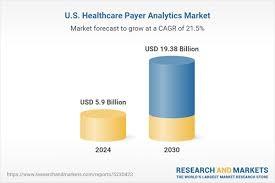
The U.S. Healthcare Analytics Market is undergoing rapid expansion as the nation’s healthcare ecosystem continues its digital transformation. Driven by rising healthcare costs, the need for improved patient outcomes, regulatory pressures, and the adoption of advanced digital technologies, analytics has become an essential tool for hospitals, payers, pharmaceutical firms, and public health agencies.
From predictive modeling and population health management to revenue cycle optimization and precision medicine, healthcare analytics is reshaping the operational, financial, and clinical landscape across the U.S.
Software, Hardware), Delivery Model (On-Demand, On-Premise), Application (Clinical Analytics, Population Health Analytics, Operational and Administrative Analytics, Financial Analytics), End User (Healthcare Payers, Healthcare Providers and ACOS, HIES, MCOS, AND TPAS) – Industry Trends and Forecast to 2030.
Healthcare analytics involves the systematic use of data, statistical methods, artificial intelligence (AI), and predictive algorithms to enhance decision-making and drive efficiencies. The U.S., with its vast healthcare spending and robust digital infrastructure, represents one of the largest and most technologically advanced markets for healthcare analytics globally.
The growing adoption of electronic health records (EHRs), integration of healthcare data sources, and the need for real-time insights are accelerating the demand for sophisticated analytics platforms. Additionally, the rising prevalence of chronic diseases and increased focus on value-based care further stimulate the adoption of data-driven healthcare solutions.
U.S. healthcare organizations are moving from fee-for-service models to value-based frameworks, which require:
Improved patient engagement
Reduction in medical errors
Better resource utilization
Analytics enables providers to monitor performance metrics, track quality outcomes, and make evidence-based decisions.
Mandates such as the HITECH Act significantly accelerated the adoption of EHRs across hospitals and clinics. The resulting exponential increase in patient data fuels the need for advanced analytics tools to:
Identify health patterns
Predict risks
Reduce administrative burdens
The U.S. has one of the highest per-capita healthcare expenditures. By using predictive and financial analytics, healthcare systems can:
Reduce operational inefficiencies
Optimize revenue cycles
Improve resource allocation
Analytics supports early detection and personalized treatment of conditions such as:
Diabetes
Cancer
Cardiovascular diseases
Predictive models help identify high-risk populations and prevent disease progression.
Rapid advancements in:
Artificial intelligence (AI)
Machine learning (ML)
Big data platforms
Natural language processing (NLP)
Cloud computing
are enabling more accurate and scalable healthcare analytics systems.
U.S. healthcare entities must comply with regulations such as:
HIPAA
MACRA
CMS guidelines
Analytics helps ensure compliance by enabling real-time monitoring, reporting, and audit readiness.
Descriptive analytics
Predictive analytics
Prescriptive analytics
Clinical analytics
Financial analytics
Operational & administrative analytics
Population health analytics
Software
Hardware
Services
Hospitals & healthcare providers
Health insurance companies
Pharmaceutical & biotech companies
Government agencies
Research institutions
AI-driven clinical analytics helps:
Predict disease outcomes
Reduce hospital readmissions
Improve diagnosis accuracy
Analytics enables tracking of:
Health trends
Community-level risk factors
Preventive care interventions
Insurers and providers use analytics to identify:
Billing irregularities
Fraudulent claims
High-cost patient patterns
Genomic data integration empowers personalized treatment strategies based on genetic profiles.
Healthcare organizations rely on analytics for:
Accurate billing
Claims management
Revenue forecasting
The U.S. market hosts a strong mix of established technology firms and specialized healthcare analytics companies, including:
IBM Watson Health
Optum (UnitedHealth Group)
Cerner Corporation (Oracle Health)
McKesson Corporation
SAS Institute Inc.
Health Catalyst
Tableau (Salesforce)
Epic Systems Corporation
These players focus on partnerships, product innovation, cloud-based platforms, and advanced AI-driven analytics solutions.
AI is increasingly embedded in diagnostic imaging, predictive risk scoring, and personalized treatment pathways.
Cloud platforms simplify data integration across:
Providers
Payers
Pharmacies
Labs
There is a push toward connecting siloed data systems for holistic patient insights.
Hospitals are using real-time dashboards to manage:
Emergency room operations
Bed occupancy
Staff allocation
SDOH data helps predict patient risks more effectively and improve public health strategies.
Browse More Reports:
Global Connected Home Medical Sensor Device Market
Global Disseminated Intravascular Coagulation (DIC) Market
Global Dopamine Agonist Drug Market
Global Edible Insect Protein Ingredients Market
Global Fanconi Anaemia Treatment Market
Global Flake Graphite Market
Global GLP-1 Analogues Market
Global Histone Deacetylase Inhibitors Market
Global Hybrid Textile Market
Global Laser Capture Microdissection Market
Global Manual Resuscitators Market
Global Medical Device Outsourcing Market
Global Membrane Chromatography Market
Global Microbial Biosensors for Diagnostics Market
Global Mobile Biometrics Market
The U.S. healthcare analytics market is expected to witness robust growth due to:
Rising adoption of AI and predictive algorithms
Greater focus on preventive and personalized healthcare
Increasing investments in health IT infrastructure
Regulatory support for digital transformation
As healthcare systems continue to generate massive amounts of data, analytics will serve as a critical tool for enhancing patient care, optimizing operations, and reducing costs across the industry.
Contact Us:
Data Bridge Market Research
US: +1 614 591 3140
UK: +44 845 154 9652
APAC : +653 1251 975
Email:- corporatesales@databridgemarketresearch.com