English
 Arabic
 French
 Spanish
 Portuguese
 Deutsch
 Turkish
 Dutch
Dutch
 Italiano
 Russian
 Romaian
 Portuguese (Brazil)
 Greek
Greek
API Contract Manufacturing Market Surges as Pharma Companies Outsource Production for Efficiency
Other |
2025-09-30 04:41:31
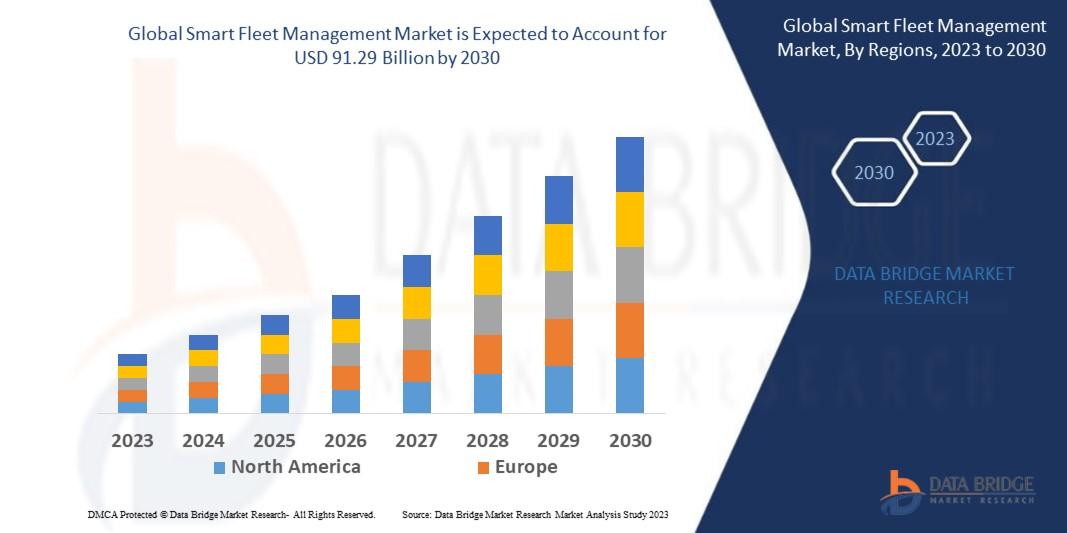
The Smart Fleet Management Market is experiencing rapid expansion as businesses across logistics, transportation, construction, utilities, and public services increasingly adopt digital solutions to optimize vehicle operations. Smart fleet management integrates advanced telematics, IoT connectivity, AI-driven analytics, cloud platforms, and real-time tracking technologies to enhance fleet visibility, reduce operational costs, improve safety, and ensure regulatory compliance.
With rising fuel prices, growing emphasis on sustainability, increasing vehicle theft, and the demand for operational efficiency, organizations are shifting away from traditional fleet monitoring systems toward intelligent, data-driven fleet management solutions. As a result, smart fleet management has evolved from a value-added capability into a mission-critical business function.
See what’s driving the Smart Fleet Management Market forward. Get the full research report:
https://www.databridgemarketresearch.com/reports/global-smart-fleet-management-market
Smart fleet management refers to the use of digital platforms and connected technologies to monitor, manage, and optimize fleets of vehicles in real time. These systems collect data from GPS devices, onboard diagnostics, sensors, and mobile applications, enabling fleet operators to make informed decisions related to routing, fuel consumption, driver behavior, vehicle maintenance, and compliance.
The market encompasses software solutions, hardware components, and service offerings, deployed across commercial fleets of varying sizes. Adoption is accelerating across both developed and emerging economies due to rapid urbanization, growth in e-commerce, and the digital transformation of transportation infrastructure.
Fleet operators face increasing pressure to reduce fuel costs, maintenance expenses, and downtime. Smart fleet management systems enable route optimization, predictive maintenance, and real-time monitoring, significantly improving asset utilization and lowering total cost of ownership.
The expansion of e-commerce has dramatically increased the need for efficient last-mile delivery solutions. Smart fleet management helps logistics providers improve delivery accuracy, monitor driver performance, and ensure timely fulfillment, making it indispensable for modern supply chains.
The widespread adoption of IoT-enabled sensors and telematics devices has transformed fleet management. These technologies provide granular insights into vehicle health, driving behavior, fuel usage, and location, enabling data-driven decision-making at scale.
Governments and regulatory bodies worldwide are enforcing stricter safety and emissions regulations. Smart fleet management solutions assist organizations in monitoring driver behavior, maintaining digital logs, and ensuring compliance, thereby reducing accident rates and legal risks.
As companies commit to environmental responsibility, fleet electrification and fuel optimization have become priorities. Smart fleet management supports carbon footprint tracking, fuel efficiency analysis, and electric vehicle integration, aligning fleet operations with sustainability goals.
Hardware: GPS trackers, telematics devices, onboard diagnostics units, sensors
Software: Fleet analytics platforms, route optimization software, dashboard and reporting tools
Services: Installation, integration, maintenance, consulting, and managed services
Cloud-Based Solutions: Highly scalable, cost-effective, and preferred for real-time data access
On-Premises Solutions: Chosen by organizations requiring enhanced data control and customization
Commercial Fleets
Public Transportation Fleets
Logistics and Delivery Fleets
Construction and Mining Fleets
Utility and Government Fleets
Vehicle tracking and monitoring
Fuel management
Driver performance management
Predictive maintenance
Compliance and safety management
Asset and inventory tracking
AI-powered analytics are enabling predictive insights, such as forecasting maintenance needs, identifying risky driving patterns, and optimizing fleet deployment. Machine learning models continuously improve performance recommendations as data volume increases.
The transition toward electric vehicles (EVs) and semi-autonomous fleets is reshaping fleet management requirements. Smart platforms now incorporate EV battery monitoring, charging optimization, and energy consumption analytics.
The rollout of high-speed connectivity technologies enhances real-time data transmission, enabling instant decision-making and improving the reliability of fleet tracking systems.
Mobile applications are empowering drivers with navigation assistance, task updates, and digital documentation, improving communication between fleet managers and on-road personnel.
North America leads the smart fleet management market due to early technology adoption, strong telematics infrastructure, and a mature logistics industry. The presence of large fleet operators and stringent safety regulations further accelerates adoption.
Europe demonstrates strong growth driven by sustainability initiatives, emission reduction mandates, and smart transportation policies. Fleet electrification and regulatory compliance play a significant role in market expansion.
Asia-Pacific is the fastest-growing region, fueled by rapid urbanization, expanding e-commerce, and increasing investments in smart city projects. Countries with large commercial vehicle populations are witnessing significant demand for cost-efficient fleet solutions.
The region is adopting smart fleet management to improve logistics efficiency, oil and gas transportation safety, and public transportation systems. Infrastructure modernization is a key growth factor.
Rising logistics activities and increasing awareness of digital fleet solutions are supporting steady market growth across the region.
The smart fleet management market is highly competitive and innovation-driven, with providers focusing on platform scalability, AI integration, and end-to-end visibility. Market participants compete on solution reliability, analytics depth, customization capabilities, and service quality.
Strategic partnerships, mergers, product enhancements, and geographic expansion are common strategies adopted to strengthen market position and expand customer reach.
Despite strong growth potential, the market faces certain challenges:
High initial investment for hardware and system integration
Data privacy and cybersecurity concerns
Complexity of integrating legacy fleet systems
Resistance to digital transformation among small fleet operators
However, continuous technological advancements and declining hardware costs are gradually mitigating these challenges.
The future of the smart fleet management market is highly promising, driven by:
Expansion of AI-powered autonomous fleet operations
Growing adoption among small and medium-sized enterprises
Integration with smart city and intelligent transportation systems
Increased demand for real-time analytics and predictive insights
As fleets become more connected and data-centric, smart fleet management will play a critical role in shaping the next generation of mobility, logistics, and transportation ecosystems.
The Smart Fleet Management Market is undergoing a transformative shift as digital technologies redefine how fleets are monitored, managed, and optimized. By enabling real-time visibility, predictive intelligence, and operational efficiency, smart fleet management solutions have become essential for organizations seeking competitiveness, sustainability, and scalability.\
Browse More Reports:
Global Water Treatment Chemicals Market
Global Scented Candle Market
Global Ceramics Market
Europe Japanese Restaurant Market
Global Tuna Market
Global Japanese Restaurant Market
Global Tote Bags Market
Global Gemstones Market
Global Smart Fleet Management Market
Global Hypochlorous Acid Market
Global Toothbrush Market
Global Cataracts Market
Global Plant-Based Food Market
Global Eyewear Market
Global Processed Fruits Market
About Data Bridge Market Research:
An absolute way to forecast what the future holds is to comprehend the trend today!
Data Bridge Market Research set forth itself as an unconventional and neoteric market research and consulting firm with an unparalleled level of resilience and integrated approaches. We are determined to unearth the best market opportunities and foster efficient information for your business to thrive in the market. Data Bridge endeavors to provide appropriate solutions to the complex business challenges and initiates an effortless decision-making process. Data Bridge is an aftermath of sheer wisdom and experience which was formulated and framed in the year 2015 in Pune.
Contact Us:
Data Bridge Market Research
US: +1 614 591 3140
UK: +44 845 154 9652
APAC : +653 1251 975
Email:- corporatesales@databridgemarketresearch.com