English
 Arabic
 French
 Spanish
 Portuguese
 Deutsch
 Turkish
 Dutch
Dutch
 Italiano
 Russian
 Romaian
 Portuguese (Brazil)
 Greek
Greek
Chris Anderson Plagiarism Controversy – Free Book Issues
Games |
2025-11-29 03:29:38
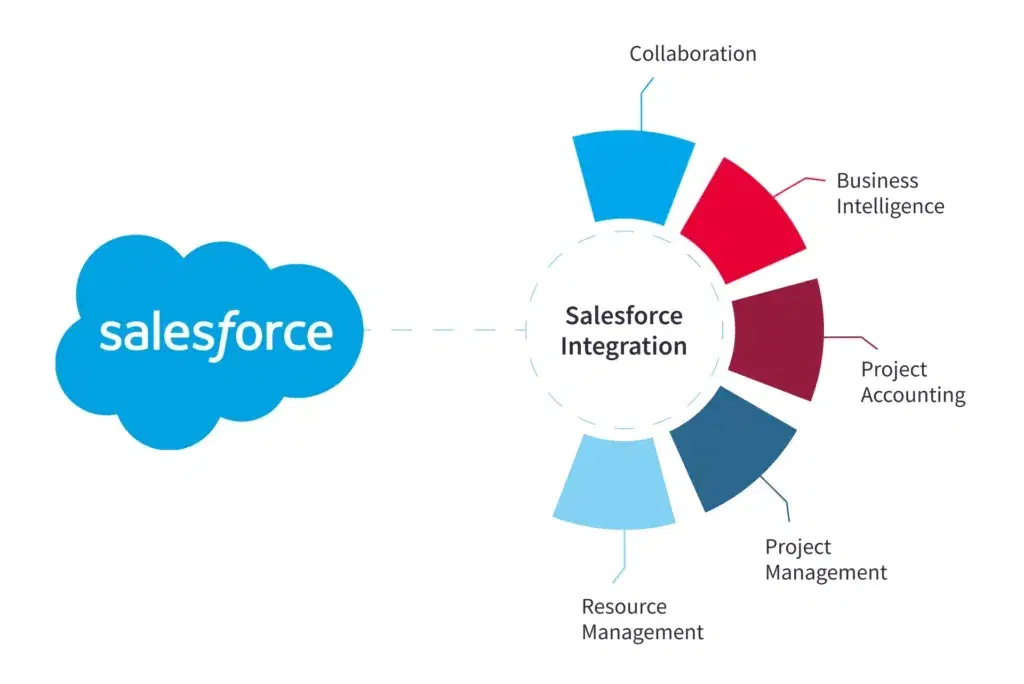
Let’s be honest—managing customers today isn’t simple anymore. Data is everywhere, teams are remote, and customers expect fast, personalized experiences. That’s where Salesforce development services step in like a digital Swiss Army knife. They help businesses customize, extend, and supercharge Salesforce so it actually fits their workflow instead of forcing teams to adapt.
If Salesforce is the engine, development services are the fine-tuning that turns it into a race car.
Salesforce isn’t just a CRM; it’s an entire ecosystem. From sales and marketing to service and analytics, it connects teams and data in one place. Companies love it because it’s:
Cloud-based and scalable
Highly customizable
Secure and enterprise-ready
Continuously evolving
But here’s the catch: out-of-the-box Salesforce can only take you so far. To unlock its real power, you need Salesforce development.
Salesforce development services involve building, customizing, and integrating solutions on the Salesforce platform to meet specific business needs. Instead of using generic features, development allows you to:
Build custom apps
Automate complex workflows
Integrate Salesforce with other tools
Enhance user experience
Scale operations without chaos
Think of it like tailoring a suit—sure, off-the-rack works, but custom fits better.
Custom apps are built when standard Salesforce features just don’t cut it. These apps solve unique business problems, whether it’s advanced reporting, custom dashboards, or industry-specific workflows.
Customization focuses on modifying existing Salesforce features:
Custom objects and fields
Page layouts
Validation rules
User permissions
This ensures Salesforce aligns perfectly with how your team actually works.
Salesforce rarely works alone. Development services integrate it with:
ERP systems
Accounting software
Marketing automation tools
Payment gateways
Third-party APIs
The result? Seamless data flow and fewer manual headaches.
Automation is where productivity skyrockets. Developers build:
Workflow rules
Process Builder flows
Salesforce Flow automations
Trigger-based actions
It’s like hiring a virtual assistant who never sleeps.
Custom development uses Salesforce’s programming tools to create advanced functionality.
Apex is Salesforce’s backend language. It’s used for:
Complex business logic
Triggers
Custom controllers
Large-scale automation
If Salesforce were a body, Apex would be the nervous system.
These technologies control the user interface:
Visualforce for custom pages
Lightning Web Components (LWC) for modern, fast, responsive UIs
Lightning makes Salesforce feel less like software and more like an app users enjoy.
Lightning development focuses on speed, flexibility, and UX. Benefits include:
Faster load times
Mobile-friendly interfaces
Component-based architecture
Users adopt Salesforce faster when it’s easy and intuitive.
With mobile Salesforce apps, teams can:
Access data on the go
Update records in real time
Improve field productivity
Perfect for sales reps, service agents, and executives.
APIs allow Salesforce to talk to other platforms. Developers use REST and SOAP APIs to ensure systems stay in sync without manual effort.
Moving data into Salesforce isn’t just copy-paste. Development ensures:
Clean data mapping
Data validation
Zero data loss
Minimal downtime
Salesforce development services are widely used in:
Healthcare
Finance
Real estate
Manufacturing
Education
E-commerce
SaaS
Any industry that values customer relationships can benefit.
Improved efficiency through automation
Better decision-making with real-time data
Scalability as your business grows
Enhanced customer experience
Reduced operational costs
Competitive advantage
In short, it helps you work smarter, not harder.
Configuration uses point-and-click tools. Development involves coding.
Choose development when you need:
Complex logic
Advanced integrations
Custom UI components
High-performance automation
Development costs more upfront but delivers long-term ROI through efficiency and scalability.
Salesforce development:
Eliminates repetitive tasks
Reduces human error
Improves collaboration
Accelerates sales cycles
Enhances reporting accuracy
It’s like upgrading from a bicycle to a high-speed train.
Certified Salesforce developers
Proven project experience
Strong communication
Agile development approach
Post-launch support
Outsourcing offers:
Lower costs
Faster delivery
Access to expert talent
Scalability on demand
Salesforce development follows strict security practices:
Role-based access
Data encryption
Secure APIs
Compliance with GDPR, HIPAA, and more
Your data stays protected while you innovate.
AI-powered automation (Einstein AI)
Low-code and no-code enhancements
Industry-specific clouds
Deeper analytics and insights
Hyper-personalized customer journeys
Salesforce isn’t slowing down—and neither should you.
Complex requirements → Clear documentation
Data quality issues → Proper migration planning
User adoption → Better UX and training
Performance concerns → Optimized Apex and queries
Challenges are normal—solutions are strategic.
Salesforce development services transform Salesforce from a standard CRM into a powerful, business-specific platform. Whether you’re automating workflows, integrating systems, or building custom apps, development ensures Salesforce works the way you need it to. In a world driven by data and relationships, investing in Salesforce development isn’t optional—it’s essential.
1. What are Salesforce development services?
They involve custom coding, integrations, automation, and app development on the Salesforce platform.
2. Is Salesforce development expensive?
It depends on complexity, but the long-term ROI usually outweighs the initial cost.
3. What is the difference between Apex and Lightning?
Apex handles backend logic, while Lightning focuses on user interface and experience.
4. Can Salesforce be integrated with third-party tools?
Yes, Salesforce supports robust API-based integrations.
5. Who should use Salesforce development services?
Any business that needs customized CRM workflows, automation, or scalability.