English
 Arabic
 French
 Spanish
 Portuguese
 Deutsch
 Turkish
 Dutch
Dutch
 Italiano
 Russian
 Romaian
 Portuguese (Brazil)
 Greek
Greek
Biodegradable Cups Market Size, Share, Trends, Demand, Growth and Competitive Analysis
Other |
2025-12-11 08:30:10
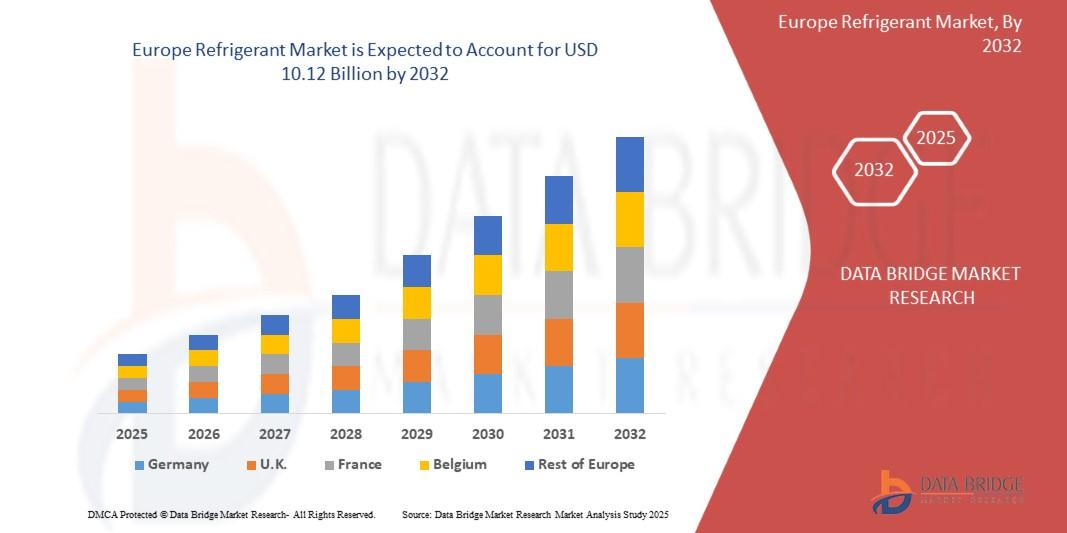
The Europe refrigerant market is undergoing a significant transformation driven by environmental regulations, technological innovation, and shifting consumer and industrial preferences. Refrigerants play a critical role in cooling and heating applications across residential, commercial, industrial, and automotive sectors. From air conditioning and refrigeration to heat pumps and cold-chain logistics, refrigerants are essential to modern life and economic activity. However, their environmental impact—particularly their contribution to global warming and ozone depletion—has made them a central focus of sustainability initiatives across Europe.
As the European Union continues to lead global efforts to reduce greenhouse gas emissions, the refrigerant market is evolving rapidly. This evolution is reshaping product portfolios, accelerating the adoption of low-global-warming-potential (GWP) alternatives, and opening new growth opportunities for manufacturers, distributors, and service providers across the region.
The Europe refrigerant market encompasses a wide range of chemical compounds used for cooling, heating, and thermal management. Historically, hydrofluorocarbons (HFCs) dominated the market due to their efficiency, safety, and compatibility with existing systems. However, growing concerns about climate change and the high GWP of many HFCs have triggered a gradual phase-down across the European Union.
Today, the market is shifting toward more environmentally friendly alternatives, including hydrofluoroolefins (HFOs), natural refrigerants such as carbon dioxide (CO₂), ammonia (NH₃), and hydrocarbons (propane and isobutane), as well as blended refrigerants designed to balance performance and environmental impact.
Europe represents one of the most mature and highly regulated refrigerant markets globally. Demand is closely tied to trends in construction, automotive production, food and beverage processing, pharmaceutical manufacturing, and cold-chain logistics. Additionally, the growing adoption of heat pumps for residential and commercial heating is creating new demand for advanced refrigerant solutions.
Uncover strategic insights and future opportunities in the Europe Refrigerant Market . Access the complete report:
https://www.databridgemarketresearch.com/reports/europe-refrigerant-market
1. Stringent Environmental Regulations
One of the strongest drivers shaping the Europe refrigerant market is regulatory pressure. The EU F-Gas Regulation mandates a gradual phase-down of high-GWP refrigerants and promotes the use of low-GWP alternatives. These rules restrict the use of certain refrigerants in new equipment and impose quotas on the production and import of HFCs.
As a result, equipment manufacturers and end users are actively transitioning to compliant refrigerants, accelerating the adoption of next-generation solutions and natural refrigerants.
2. Growing Demand for Sustainable Cooling and Heating
With rising awareness of climate change and energy efficiency, both consumers and businesses are prioritizing sustainable technologies. Heat pumps, energy-efficient air conditioners, and eco-friendly refrigeration systems are increasingly favored in residential, commercial, and industrial applications.
Low-GWP refrigerants are central to these technologies, making them a key growth area within the European market.
3. Expansion of Cold Chain and Food Processing
Europe’s food and beverage industry relies heavily on refrigeration for storage, processing, and transportation. The expansion of cold-chain logistics, driven by e-commerce, fresh food consumption, and pharmaceutical distribution, is fueling demand for reliable and efficient refrigerant systems.
Natural refrigerants such as CO₂ and ammonia are gaining popularity in large-scale refrigeration due to their low environmental impact and high efficiency.
4. Technological Advancements in Refrigeration Systems
Innovations in compressor design, system architecture, and refrigerant chemistry are enabling better performance with lower environmental impact. New-generation refrigerants offer improved thermodynamic efficiency, reduced leakage rates, and enhanced system compatibility.
These advancements are supporting the transition to low-GWP refrigerants without compromising performance or safety.
By Refrigerant Type
The Europe refrigerant market can be segmented into HFCs, HFOs, natural refrigerants, and blended refrigerants. HFCs are steadily losing market share due to regulatory constraints, while HFOs and natural refrigerants are gaining momentum. CO₂ is widely used in commercial refrigeration, ammonia dominates industrial refrigeration, and hydrocarbons are increasingly adopted in domestic appliances.
By Application
Major application segments include air conditioning, refrigeration, heat pumps, and automotive HVAC. Refrigeration—particularly commercial and industrial refrigeration—represents a significant share of demand. Heat pumps are the fastest-growing segment, driven by decarbonization policies and incentives for renewable heating.
By End-Use Industry
Key end-use industries include residential, commercial, industrial, and automotive. The commercial sector, encompassing supermarkets, data centers, and office buildings, accounts for a substantial portion of refrigerant consumption. The automotive sector is also transitioning toward low-GWP refrigerants for vehicle air conditioning systems.
Europe has one of the most comprehensive regulatory frameworks governing refrigerants. The EU F-Gas Regulation aims to cut HFC emissions significantly by reducing their availability and restricting their use in specific applications. The regulation also promotes recovery, recycling, and proper disposal of refrigerants to minimize environmental harm.
In addition to EU-wide policies, individual countries have introduced national incentives and regulations to encourage the adoption of low-GWP refrigerants and energy-efficient systems. These policies are accelerating market transformation and influencing product development strategies.
The Europe refrigerant market is moderately consolidated, with a mix of global chemical companies, regional suppliers, and specialty manufacturers. Leading players are investing heavily in research and development to introduce next-generation refrigerants that meet regulatory requirements while maintaining high performance.
Strategic collaborations, capacity expansions, and portfolio diversification are common competitive strategies. Many companies are also offering training and technical support to help installers and end users transition to new refrigerant technologies safely and effectively.
1. High Transition Costs
Switching from legacy refrigerants to low-GWP alternatives often requires new equipment or system modifications, leading to higher upfront costs. This can be a barrier for small and medium-sized businesses.
2. Safety and Handling Concerns
Some natural refrigerants, such as ammonia and hydrocarbons, pose safety risks due to toxicity or flammability. Ensuring proper system design, installation, and maintenance is critical to mitigating these risks.
3. Supply Chain Constraints
Quota restrictions and regulatory compliance requirements can create supply shortages or price volatility for certain refrigerants, affecting system maintenance and servicing.
The future of the Europe refrigerant market is firmly aligned with sustainability and innovation. Low-GWP refrigerants are expected to dominate new installations, while demand for HFCs will continue to decline. Heat pumps and energy-efficient refrigeration systems will be major growth drivers, supported by government incentives and decarbonization targets.
Natural refrigerants and HFOs will play complementary roles, with their adoption varying by application and system size. Digital monitoring, predictive maintenance, and smart HVAC technologies will further enhance system efficiency and refrigerant management.
As Europe continues to lead global climate action, the refrigerant market will remain at the forefront of environmental and technological change. Companies that invest in sustainable solutions, regulatory compliance, and customer education will be best positioned to capture long-term growth opportunities.
The Europe refrigerant market is undergoing a profound transition driven by environmental regulations, technological innovation, and the shift toward sustainable cooling and heating solutions. While challenges such as high transition costs and safety concerns remain, the long-term outlook is highly positive.
Browse More Reports:
Global Water Treatment Chemicals Market
Global Scented Candle Market
Global Ceramics Market
Europe Japanese Restaurant Market
Global Smart Fleet Management Market
Global Tuna Market
Global Tote Bags Market
Global Gemstones Market
Global Japanese Restaurant Market
Global Hypochlorous Acid Market
Global Toothbrush Market
Global Cataracts Market
Global Wire and Cable Market
Global Plant-Based Food Market
Global Tomatoes Market
About Data Bridge Market Research:
An absolute way to forecast what the future holds is to comprehend the trend today!
Data Bridge Market Research set forth itself as an unconventional and neoteric market research and consulting firm with an unparalleled level of resilience and integrated approaches. We are determined to unearth the best market opportunities and foster efficient information for your business to thrive in the market. Data Bridge endeavors to provide appropriate solutions to the complex business challenges and initiates an effortless decision-making process. Data Bridge is an aftermath of sheer wisdom and experience which was formulated and framed in the year 2015 in Pune.
Contact Us:
Data Bridge Market Research
US: +1 614 591 3140
UK: +44 845 154 9652
APAC : +653 1251 975
Email:- corporatesales@databridgemarketresearch.com