English
 Arabic
 French
 Spanish
 Portuguese
 Deutsch
 Turkish
 Dutch
Dutch
 Italiano
 Russian
 Romaian
 Portuguese (Brazil)
 Greek
Greek
Netflix Charts: Top Trending Shows & Movies This Week
Games |
2025-12-17 04:32:18
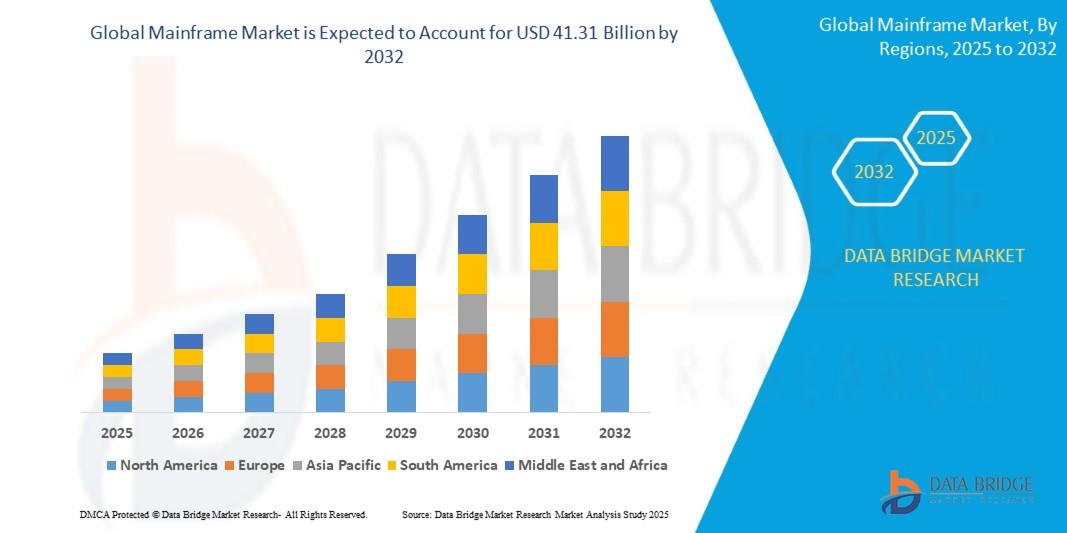
The Mainframe Market continues to hold a vital position in the global IT landscape despite the rapid rise of cloud computing, edge computing, and distributed systems. Far from being obsolete, modern mainframes have evolved into highly secure, scalable, and performance-optimized platforms that support mission-critical workloads across banking, government, healthcare, retail, transportation, and large-scale enterprises. As organizations face growing data volumes, cybersecurity threats, and demand for real-time processing, mainframes are experiencing a resurgence driven by modernization, hybrid cloud integration, and AI-enabled capabilities.
This article explores the structure of the mainframe market, its key growth drivers, technology trends, application areas, challenges, regional outlook, and future growth prospects.
Uncover strategic insights and future opportunities in the Mainframe Market . Access the complete report:
https://www.databridgemarketresearch.com/reports/global-mainframe-market
Mainframes are high-performance computing systems designed to process large volumes of data, handle massive transaction throughput, and deliver continuous availability. Unlike commodity servers, mainframes are engineered for reliability, security, and scalability, making them indispensable for organizations that cannot tolerate downtime or data breaches.
The mainframe market includes:
Mainframe hardware systems
Operating systems and virtualization software
Middleware and databases
Storage and networking components
Mainframe services such as maintenance, modernization, and application migration
Major technology providers dominate this market, offering integrated solutions that combine computing power, advanced encryption, workload management, and high-speed I/O processing.
Industries such as banking, financial services, insurance, government, and telecommunications rely on mainframes for real-time transaction processing. Core banking platforms, payment gateways, airline reservation systems, and national identity databases require near-zero downtime and high integrity, making mainframes a preferred choice.
Mainframes are widely regarded as one of the most secure computing environments available. With built-in encryption, hardware-level security features, and isolated workloads, they offer superior protection against cyberattacks. As regulatory pressure intensifies and data breaches become more frequent, organizations are reinforcing their core systems with mainframe-based security architectures.
Contrary to popular belief, mainframes are not static legacy systems. Enterprises are modernizing mainframe applications using APIs, DevOps pipelines, containerization, and microservices. These upgrades allow mainframes to integrate seamlessly with cloud platforms and modern front-end applications, enabling digital transformation without replacing core infrastructure.
While mainframes have high upfront costs, they often deliver superior cost efficiency for large-scale workloads. Their ability to consolidate thousands of virtual servers onto a single platform reduces power consumption, data center footprint, and administrative overhead, making them economically viable for large enterprises.
Modern mainframes are being equipped with AI accelerators and specialized processors capable of running machine learning models directly on transactional data. This enables real-time fraud detection, predictive maintenance, and intelligent customer analytics without transferring data to external platforms.
Hybrid IT strategies are driving mainframe relevance. Enterprises are connecting mainframes with private and public cloud platforms, allowing workloads to move dynamically between environments. This hybrid model supports workload optimization, disaster recovery, and application modernization initiatives.
DevOps adoption is transforming how mainframe applications are developed and maintained. Automated testing, continuous integration, and continuous deployment pipelines are being applied to COBOL, PL/I, and Java-based mainframe applications, significantly improving development speed and reliability.
Mainframe workloads are increasingly being exposed via APIs and microservices architectures. Container technologies enable integration with distributed systems, allowing organizations to modernize user interfaces and business logic while retaining core transaction engines on mainframes.
The BFSI sector remains the largest consumer of mainframe systems. Core banking operations, clearing and settlement systems, ATM networks, and real-time payment processing rely heavily on mainframes due to their unmatched reliability and throughput.
Governments use mainframes for tax processing, social security administration, census data management, and national defense systems. These applications demand long-term stability, compliance, and secure data handling.
Healthcare providers and insurers use mainframes to manage patient records, claims processing, billing systems, and regulatory compliance reporting. High data volumes and strict privacy requirements make mainframes an attractive solution.
Large retailers depend on mainframes for inventory management, point-of-sale systems, supply chain coordination, and loyalty programs. During peak shopping seasons, mainframes handle massive transaction spikes with consistent performance.
Airlines, railways, and logistics companies use mainframes for reservation systems, ticketing platforms, cargo tracking, and fleet management, ensuring uninterrupted service availability.
One of the most pressing challenges is the aging workforce of mainframe professionals. Many experienced engineers and developers are nearing retirement, while fewer young professionals are entering the field. Although training programs and modern development tools are helping address this issue, talent scarcity remains a concern.
Mainframes are often perceived as outdated or inflexible. This misconception can discourage investment, even though modern mainframes support cloud integration, modern programming languages, and agile development practices.
The initial cost of mainframe hardware and licensing can be substantial, making it difficult for small and medium-sized enterprises to adopt these systems. However, for large-scale workloads, long-term total cost of ownership often remains competitive.
The mainframe market is highly consolidated, with a small number of dominant vendors. This concentration can limit pricing flexibility and innovation diversity, though it also ensures long-term product support and ecosystem stability.
North America dominates the mainframe market due to the strong presence of major financial institutions, government agencies, and technology providers. High IT spending and advanced digital infrastructure continue to support market growth.
European countries maintain significant mainframe deployments across banking, insurance, and public sector operations. Regulatory compliance requirements and data sovereignty concerns are sustaining demand for secure and locally hosted computing systems.
The Asia-Pacific region is emerging as a high-growth market driven by expanding banking networks, government digitalization programs, and rapid e-commerce growth. Countries such as China, India, and Japan are investing heavily in enterprise IT modernization.
These regions are gradually adopting mainframe solutions for national banking infrastructure, public administration, and telecommunications. While growth is slower compared to developed markets, increasing digital maturity is creating new opportunities.
The mainframe market is characterized by long-term customer relationships, high switching costs, and deep ecosystem integration. Vendors focus on continuous innovation, backward compatibility, and enterprise-grade support services. Strategic partnerships with cloud providers, cybersecurity firms, and software vendors are strengthening product portfolios and expanding market reach.
Service providers specializing in application modernization, managed services, and mainframe migration are also playing a critical role in sustaining market momentum.
The future of the mainframe market looks stable and resilient, supported by ongoing modernization, security demands, and hybrid cloud strategies. Rather than being replaced, mainframes are being repositioned as central components of enterprise digital cores.
Key future trends include:
Greater use of AI and real-time analytics on mainframe data
Deeper integration with multi-cloud platforms
Expansion of DevOps and low-code tools for mainframe development
Increased focus on sustainability through energy-efficient hardware
Growth in mainframe-as-a-service and consumption-based pricing models
As organizations prioritize reliability, security, and scalability, mainframes will continue to serve as foundational systems for mission-critical workloads.
The mainframe market remains a cornerstone of global enterprise computing, offering unmatched reliability, security, and performance for large-scale operations. While cloud computing and distributed systems dominate headlines, mainframes quietly power the world’s most critical digital infrastructure.
Browse More Reports:
Global Water Treatment Chemicals Market
Global Scented Candle Market
Global Ceramics Market
Europe Japanese Restaurant Market
Global Smart Fleet Management Market
Global Tuna Market
Global Tote Bags Market
Global Gemstones Market
Global Japanese Restaurant Market
Global Hypochlorous Acid Market
Global Toothbrush Market
Global Cataracts Market
Global Wire and Cable Market
Global Plant-Based Food Market
Global Tomatoes Market
About Data Bridge Market Research:
An absolute way to forecast what the future holds is to comprehend the trend today!
Data Bridge Market Research set forth itself as an unconventional and neoteric market research and consulting firm with an unparalleled level of resilience and integrated approaches. We are determined to unearth the best market opportunities and foster efficient information for your business to thrive in the market. Data Bridge endeavors to provide appropriate solutions to the complex business challenges and initiates an effortless decision-making process. Data Bridge is an aftermath of sheer wisdom and experience which was formulated and framed in the year 2015 in Pune.
Contact Us:
Data Bridge Market Research
US: +1 614 591 3140
UK: +44 845 154 9652
APAC : +653 1251 975
Email:- corporatesales@databridgemarketresearch.com